Every original artwork begins with an idea.
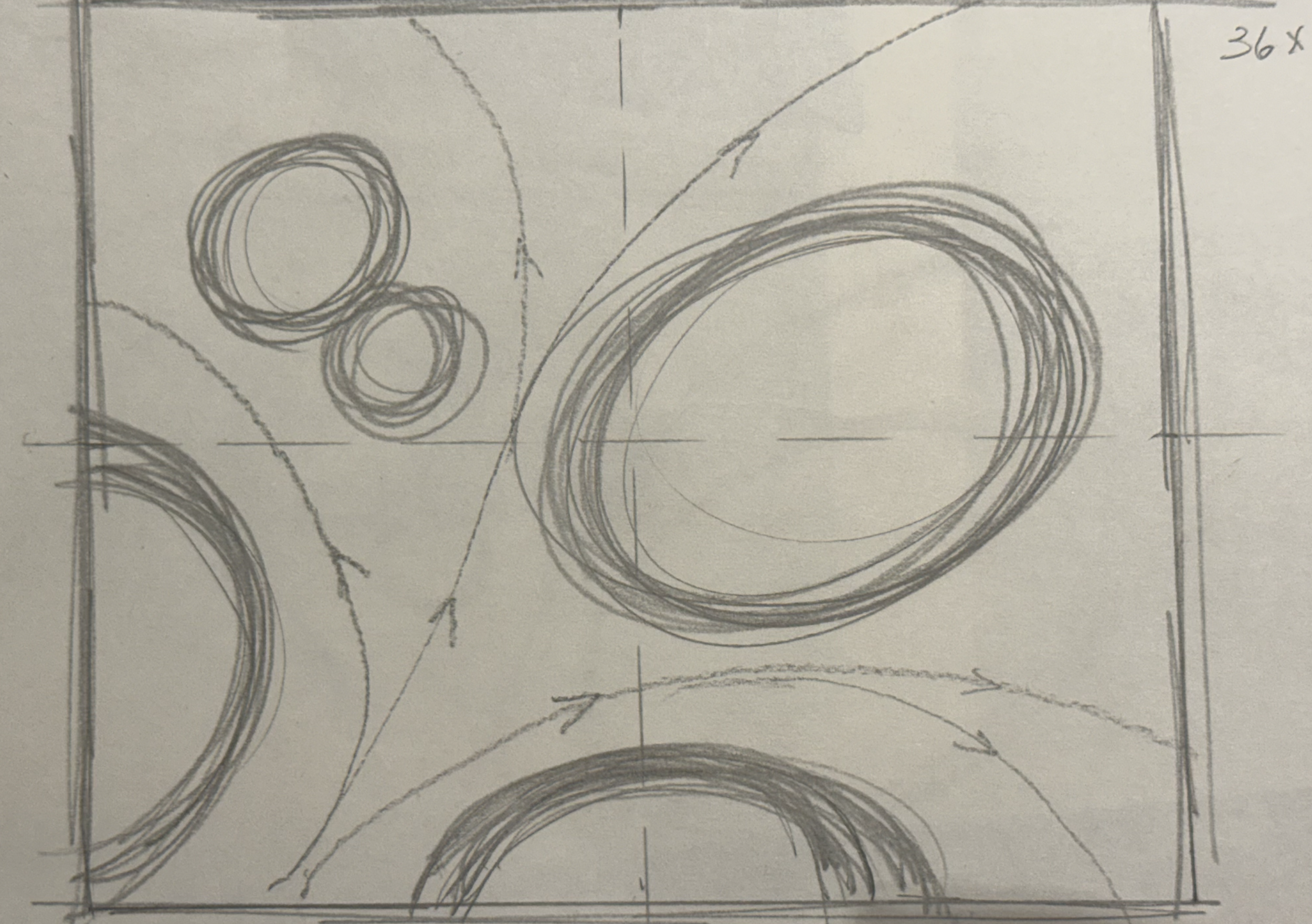
For Marilyn McRae, that idea often starts with a simple sketch. Before recycled magazine pages are cut, folded, torn, layered, or sculpted, shapes and patterns begin to take form on paper.
From Lines to Possibilities
A sketch gives Marilyn a place to explore.
Curving lines, geometric forms, repeated patterns, and organic shapes can become the foundation for a larger composition. Some sketches suggest movement and flow, while others explore structure, rhythm, or the relationship between shapes.
At this stage, the drawing doesn’t have to provide all the answers. It opens the door to possibilities.
Imagining Paper in Three Dimensions
What makes Marilyn’s process unique is the transition from a two-dimensional sketch to a three-dimensional work of art.
A simple line might become a folded strip of paper. A drawn curve can inspire a rolled form. Repeated shapes can become layers, creating depth and shadow. What begins as a pencil drawing gradually becomes something that can be touched, viewed from different angles, and experienced through texture and dimension.
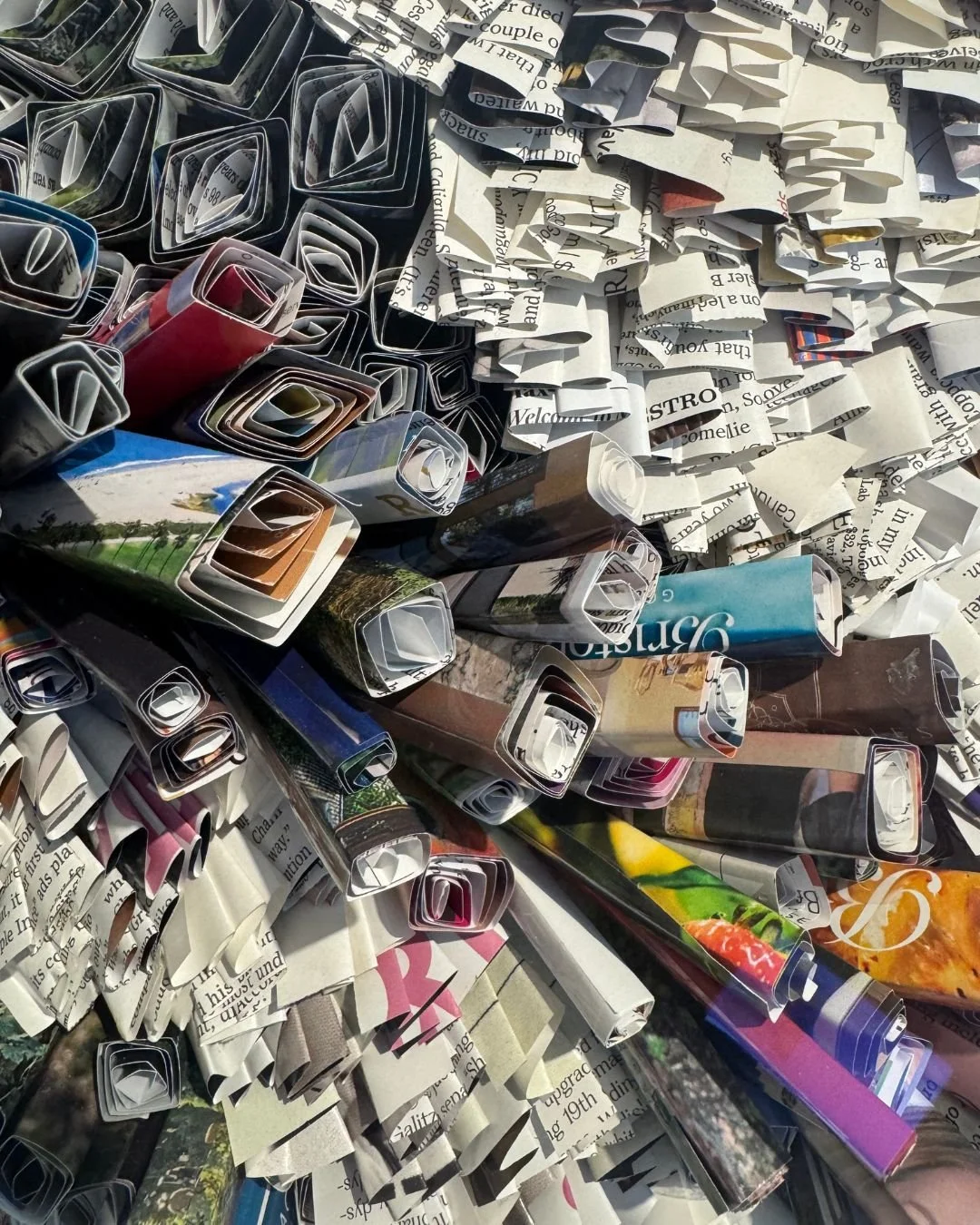
Metropolis detail, layers of folds and rolls
The sketches are not always a strict blueprint. They are a starting point—a way to explore what might happen when an idea meets the material.
The Material Becomes Part of the Process
Once the concept begins to take shape, recycled magazine pages bring another element into the work.
Color, printed imagery, text, and unexpected patterns on the pages can influence how the original idea develops. Marilyn may change direction as she works, allowing the paper itself to suggest new possibilities.
This is where experimentation becomes essential.
A shape may need to be folded differently. A line may become more dimensional. A section may be torn, layered, rolled, or reshaped. The original sketch provides the idea, but the paper helps determine where the artwork ultimately goes.
Sketches That Evolve Into Art
The sketches shown here offer a glimpse into that early stage of Marilyn’s creative process. They reveal how an abstract thought can begin as lines and shapes before evolving into an original paper composition.
There is something fascinating about seeing both the beginning and the finished work—the quiet simplicity of the sketch alongside the texture, movement, and dimension of the completed artwork.
For Marilyn, the process is part of the art.
A line becomes a shape.
A shape becomes a form.
A sketch becomes something unexpected.
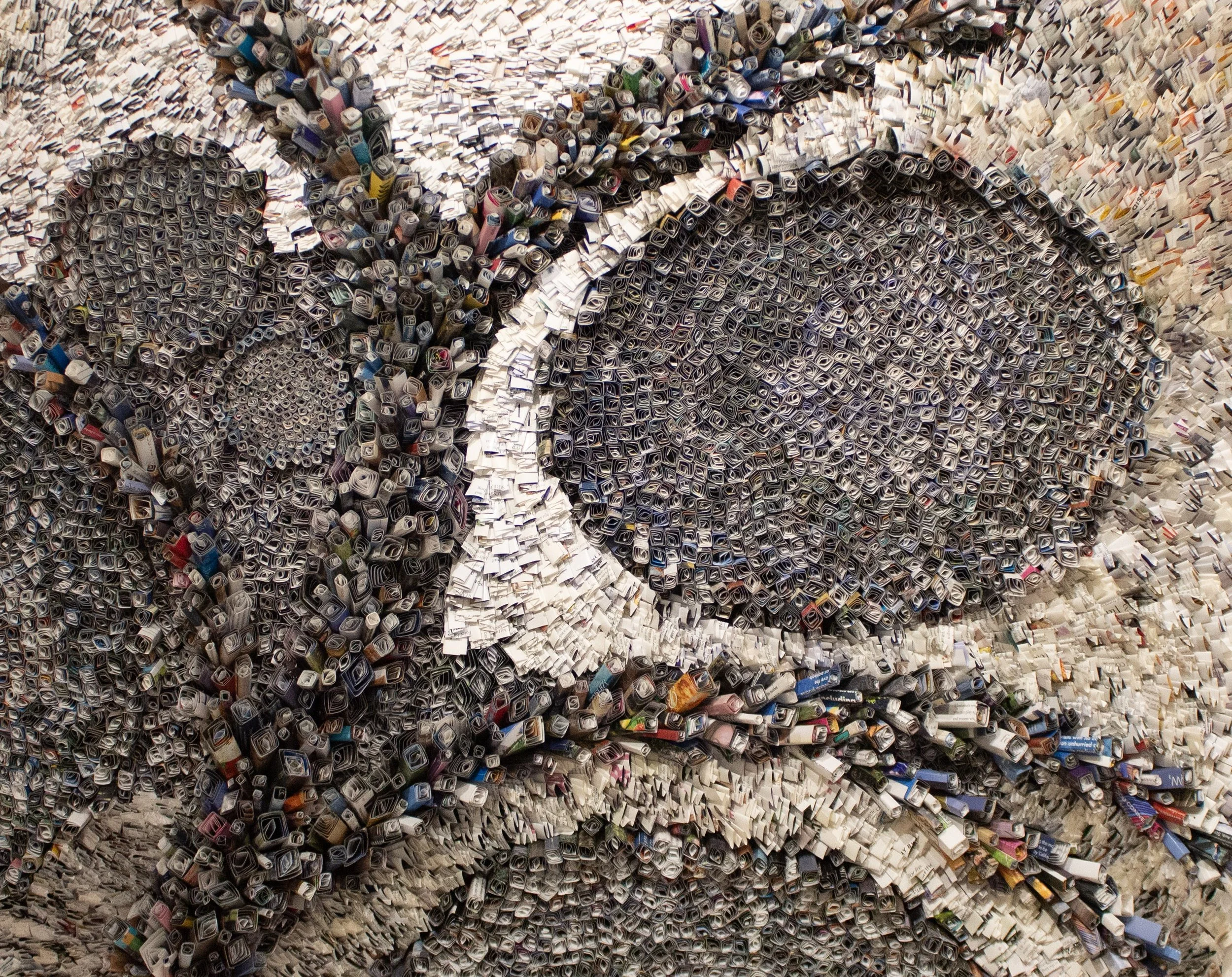
Metropolis, original paper art by Marilyn McRae, 44” x 38” x 4”, framed
And somewhere between the original idea and the finished piece, paper becomes art.
Look closely. Every finished artwork has a story that begins long before the first piece of paper is folded.